
Flood warnings in Marysville and Marshall County, Kan.; Big Blue River near Blue Rapids, Oct. 30–31
Never walk, swim or drive through floodwater. Ready.gov says just six inches of moving water can knock you down, and one foot of moving water can sweep your vehicle away.
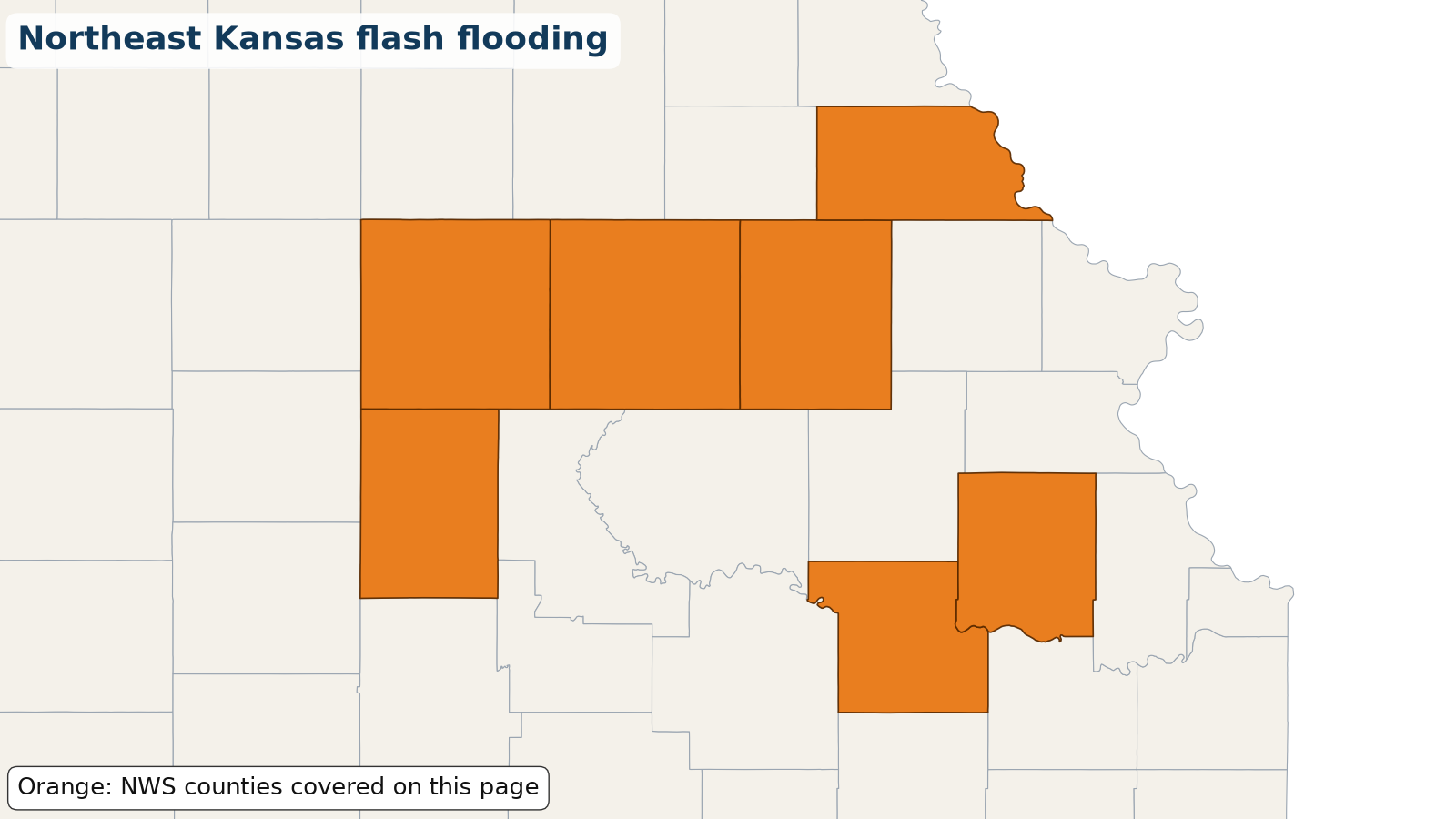
Past event. Flood · Kansas, Nebraska · Oct. 30, 2026 to Oct. 31, 2026. In danger, call 911.
What is happening
Overnight Friday, Oct. 30, NWS Topeka issued Flash Flood Warnings for parts of Marshall, Nemaha, Washington, Clay, Shawnee and Jefferson counties in Kansas, and NWS Omaha issued one for southwestern Richardson County, Nebraska. At 4:35 AM CDT, emergency management reported 4 to 6 inches of rain in west-central Marshall County, with numerous roads closed and at least one road in Marysville impassable; NWS Topeka has Flood Warnings there until 10:30 AM CDT, and for central Marshall County, including Beattie, until 7:15 AM CDT. The Big Blue River near Blue Rapids is forecast to rise above its 26-foot flood stage and crest near 29.7 feet Friday afternoon (minor lowland flooding from Marysville to Tuttle Creek Lake), then fall below flood stage Friday evening; that warning runs until 9 AM CDT Saturday. No additional rain is expected in Marshall County; never drive through flooded roads.
Areas under warnings include Marshall, Nemaha, Washington, Clay, Shawnee and Jefferson counties in Kansas, including Marysville, Beattie, Blue Rapids, Valley Falls and Topeka, and Richardson County in southeast Nebraska.
Source: NWS Topeka Flood Warnings for Marshall County (4:36 AM CDT) and Big Blue River near Blue Rapids (3:45 AM CDT), Oct. 30, 2026. Warnings change; the live panel below is the current word from NWS.
Let family know you’re OK
Makes a message and picture you can text. Nothing is saved on our servers.
Make a check-in message
Local help near you
Open shelters and FEMA Disaster Recovery Centers in Kansas, Nebraska, straight from FEMA.
Loading open shelters…
Follow for storm updates: Facebook (opens in a new tab)X (opens in a new tab)
Live NWS alerts for the affected areas
Loading live data…
FEMA disaster declarations
Loading live data…
Confirmed damage
Only official reports: NWS Local Storm Reports and damage surveys, plus statements from FEMA, USGS and state or county emergency management. No news or social media rumors.
Show storm reports and official statements
Loading NWS storm reports…
Preliminary reports; official totals may change.
Official state and local links
- Kansas Adjutant General's Department (Kansas Emergency Management)State emergency management
- KanDriveKansas road conditions and closures
- Marshall County, KansasMarshall County local information
- Nebraska Emergency Management AgencyState emergency management
- Nebraska 511Nebraska road conditions and closures
- NWS TopekaForecasts and warnings · NWS
- NWS Omaha/ValleyForecasts and warnings · NWS
During: stay safe
- Get to safe shelter right away and evacuate if officials tell you to.
- Turn Around, Don't Drown: do not walk, swim or drive through floodwater, and never drive around barricades.
- Stay off bridges over fast-moving water.
- If you're trapped in a building, go to the highest level. Do not climb into a closed attic; only go on the roof if necessary, then signal for help.
- If your car is trapped in rapidly moving water, stay inside. Get on the roof if water rises inside the car.
Source: (Ready.gov: Floods)
After: recover
- Return home only when officials say it's safe.
- Stay out of floodwater: it can be contaminated, hide debris, or be electrically charged by downed lines.
- Don't touch electrical equipment if it's wet or you're standing in water.
- Wear gloves, boots and protective clothing to clean up, and dry your home within 24 to 48 hours to limit mold.
- Homeowners insurance usually doesn't cover flooding; if you have NFIP or private flood insurance, file your claim and photograph everything first.
More official guidance
- NWS flood safetyFlood and flash flood safety · NWS
- National Water Prediction ServiceRiver forecasts and flood levels · NOAA
- Ready.gov: FloodsBefore, during and after · Ready.gov
- Water damage and mold guideDrying out and cleanup
- Flood insurance waiting periodNFIP 30-day wait explained
- Nor'easter and coastal flood guideCoastal flood alerts and what to do
- King tides and sunny-day floodingHigh tide flooding explained
- Flooding: full safety guide
Get help
- Roads & closures511, road conditions, flooding
- Find shelterOpen shelters and hotel help
- Boil-water noticesIs your tap water safe?
- FEMA & money helpAid, loans and free legal help
- Tarps & roof helpTarps, roof help and volunteer crews
- Safety firstGas, power lines, CO, floodwater
- After the storm: housing, mental health, money
- Insurance photo checklist
Common questions
Where can I see current warnings for the northeast kansas flash flooding?
The live panel on this page pulls active alerts straight from the National Weather Service for the affected zones in Kansas, Nebraska. You can also check your local NWS office or weather.gov.
Is FEMA assistance available for the northeast kansas flash flooding?
Only if a federal disaster is declared for your county. The FEMA panel on this page shows any declarations as they come in; you can also check DisasterAssistance.gov or call 1-800-621-3362.
How much water does it take to sweep away a car?
Ready.gov says one foot of moving water can sweep your vehicle away, and just six inches of moving water can knock you down.
Does homeowners insurance cover flood damage?
Usually not. Ready.gov notes homeowners policies do not cover flooding; flood coverage comes from the National Flood Insurance Program or a private flood policy, which typically takes 30 days to start.