
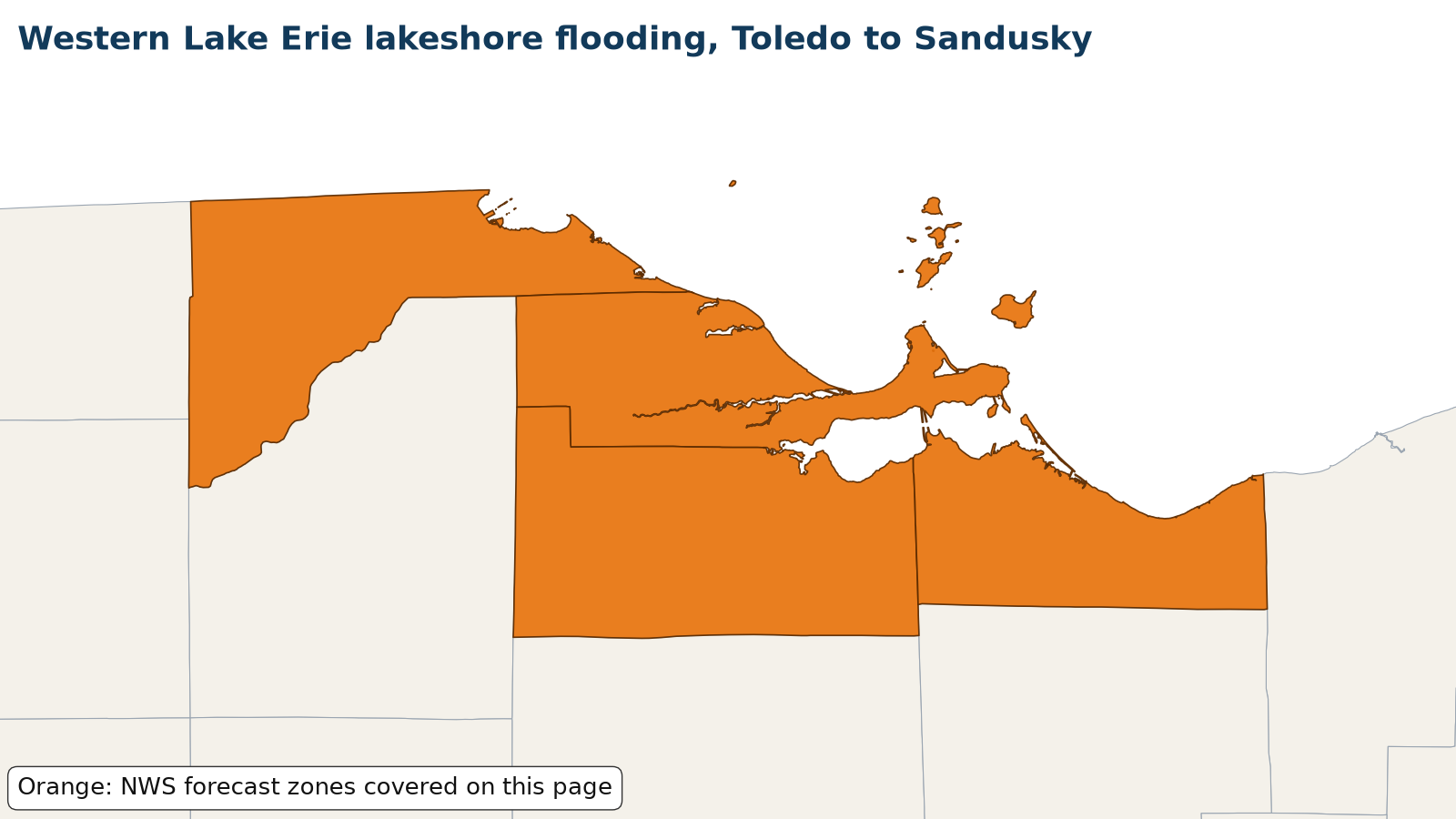
Lakeshore flood warning for Lucas, Ottawa, Sandusky and Erie counties, Ohio, on Lake Erie, Nov. 26–27
Do this right now
- Turn around at flooded roads. A foot of moving water can sweep a car away.
- If water is rising around you, move to higher ground now.
- Stay out of floodwater and away from downed power lines.
- Check the live warnings for this area before you travel.
Other active storms: Southwest flooding: Arizona, Nevada, Utah, N.M., Texas, Colorado · Florida east coast heavy rain and flood watches · California coast high tides and coastal flooding · Oregon and Washington coast king tides and coastal flooding · Mid-Atlantic coastal flooding and high winds
Never walk, swim or drive through floodwater. Ready.gov says just six inches of moving water can knock you down, and one foot of moving water can sweep your vehicle away.
Active. Flood · Ohio · Nov. 26, 2026 to Nov. 27, 2026. In danger, call 911.
What is happening
NWS Cleveland has a Lakeshore Flood Warning for Lucas, Ottawa, Sandusky and Erie counties, Ohio, from 10 AM EST Thursday, Nov. 26, to 4 AM EST Friday, Nov. 27, for significant lakeshore flooding. A prolonged period of northeast gales to 45 knots will push water levels up across Lake Erie's western basin; at Toledo the lake is expected to rise to near 82 inches above low water datum Thursday evening before levels start to fall Thursday night. NWS says numerous roads will be closed, low-lying property including parking lots, lawns, homes and businesses will be inundated near the lake, and some shoreline erosion will occur. The warning was first issued at 12:03 AM EST Thursday and reissued at 3:14 AM EST; in its 3:19 PM EST update NWS Cleveland said northeast gales around 40 knots will push Toledo water levels to about one foot above flood stage Thursday evening before they start to fall later Thursday night.
Areas under warnings include The Lake Erie shoreline of Lucas County (including Toledo), Ottawa County, Sandusky County and Erie County, Ohio.
Source: NWS Cleveland Lakeshore Flood Warning (3:14 AM EST Nov. 26, 2026); NWS Cleveland Lakeshore Flood Warning update (3:19 PM EST Nov. 26, 2026). Warnings change; the live panel below is the current word from NWS.
Let family know you’re OK
Makes a message and picture you can text. Nothing is saved on our servers.
Make a check-in message
Local help near you
Open shelters and FEMA Disaster Recovery Centers in Ohio, straight from FEMA.
Loading open shelters…
Follow for storm updates: Facebook (opens in a new tab)X (opens in a new tab)
Live NWS alerts for the affected areas
Loading live data…
FEMA disaster declarations
Loading live data…
Confirmed damage
Only official reports: NWS Local Storm Reports and damage surveys, plus statements from FEMA, USGS and state or county emergency management. No news or social media rumors.
Show storm reports and official statements
Loading NWS storm reports…
Preliminary reports; official totals may change.
Official state and local links
- Lucas County Emergency Management AgencyLucas County, Ohio (Toledo)
- Ottawa County Emergency Management AgencyOttawa County, Ohio
- Sandusky County Emergency ManagementSandusky County, Ohio
- Erie County Emergency ManagementErie County, Ohio
- OHGOOhio road conditions and closures
- NOAA Toledo water level gaugeLive Lake Erie water level at Toledo
- NWS ClevelandForecasts and warnings · NWS
During: stay safe
- Get to safe shelter right away and evacuate if officials tell you to.
- Turn Around, Don't Drown: do not walk, swim or drive through floodwater, and never drive around barricades.
- Stay off bridges over fast-moving water.
- If you're trapped in a building, go to the highest level. Do not climb into a closed attic; only go on the roof if necessary, then signal for help.
- If your car is trapped in rapidly moving water, stay inside. Get on the roof if water rises inside the car.
Source: (Ready.gov: Floods)
After: recover
- Return home only when officials say it's safe.
- Stay out of floodwater: it can be contaminated, hide debris, or be electrically charged by downed lines.
- Don't touch electrical equipment if it's wet or you're standing in water.
- Wear gloves, boots and protective clothing to clean up, and dry your home within 24 to 48 hours to limit mold.
- Homeowners insurance usually doesn't cover flooding; if you have NFIP or private flood insurance, file your claim and photograph everything first.
More official guidance
- NWS flood safetyFlood and flash flood safety · NWS
- National Water Prediction ServiceRiver forecasts and flood levels · NOAA
- Ready.gov: FloodsBefore, during and after · Ready.gov
- Water damage and mold guideDrying out and cleanup
- Flood insurance waiting periodNFIP 30-day wait explained
- Nor'easter and coastal flood guideCoastal flood alerts and what to do
- King tides and sunny-day floodingHigh tide flooding explained
- River flood stages explainedMinor, moderate and major on a river gauge
- Atmospheric rivers and mudslidesWest Coast heavy rain and debris flows
- Flooding: full safety guide
Get help
- Roads & closures511, road conditions, flooding
- Find shelterOpen shelters and hotel help
- Boil-water noticesIs your tap water safe?
- FEMA & money helpAid, loans and free legal help
- Tarps & roof helpTarps, roof help and volunteer crews
- Safety firstGas, power lines, CO, floodwater
- After the storm: housing, mental health, money
- Insurance photo checklist
Common questions
Where can I see current warnings for the western lake erie lakeshore flooding, toledo to sandusky?
The live panel on this page pulls active alerts straight from the National Weather Service for the affected zones in Ohio. You can also check your local NWS office or weather.gov.
Is FEMA assistance available for the western lake erie lakeshore flooding, toledo to sandusky?
Only if a federal disaster is declared for your county. The FEMA panel on this page shows any declarations as they come in; you can also check DisasterAssistance.gov or call 1-800-621-3362.
How much water does it take to sweep away a car?
Ready.gov says one foot of moving water can sweep your vehicle away, and just six inches of moving water can knock you down.
Does homeowners insurance cover flood damage?
Usually not. Ready.gov notes homeowners policies do not cover flooding; flood coverage comes from the National Flood Insurance Program or a private flood policy, which typically takes 30 days to start.